The days
Seven things you can do, and what each is actually for
Including which of them are big-game activities and which are emphatically not, since the brochures rarely distinguish.
Mokoro
A shallow dugout (traditionally carved from a tree, now usually fibreglass for conservation reasons) poled from the stern by somebody standing up.
You sit a few inches above the water, moving at walking pace through papyrus and lily beds, with reed frogs and dragonflies at eye level and almost no sound. It is the thing most people remember about the Delta.
It is not a big-game activity. You may pass elephant or lechwe at a respectful distance; you will not see lion from a mokoro. Take it for what it is, and you will remember it long after the photographs from the vehicle blur together.
It needs water, which is why the timing of your trip decides whether it happens at all.
Motorboat
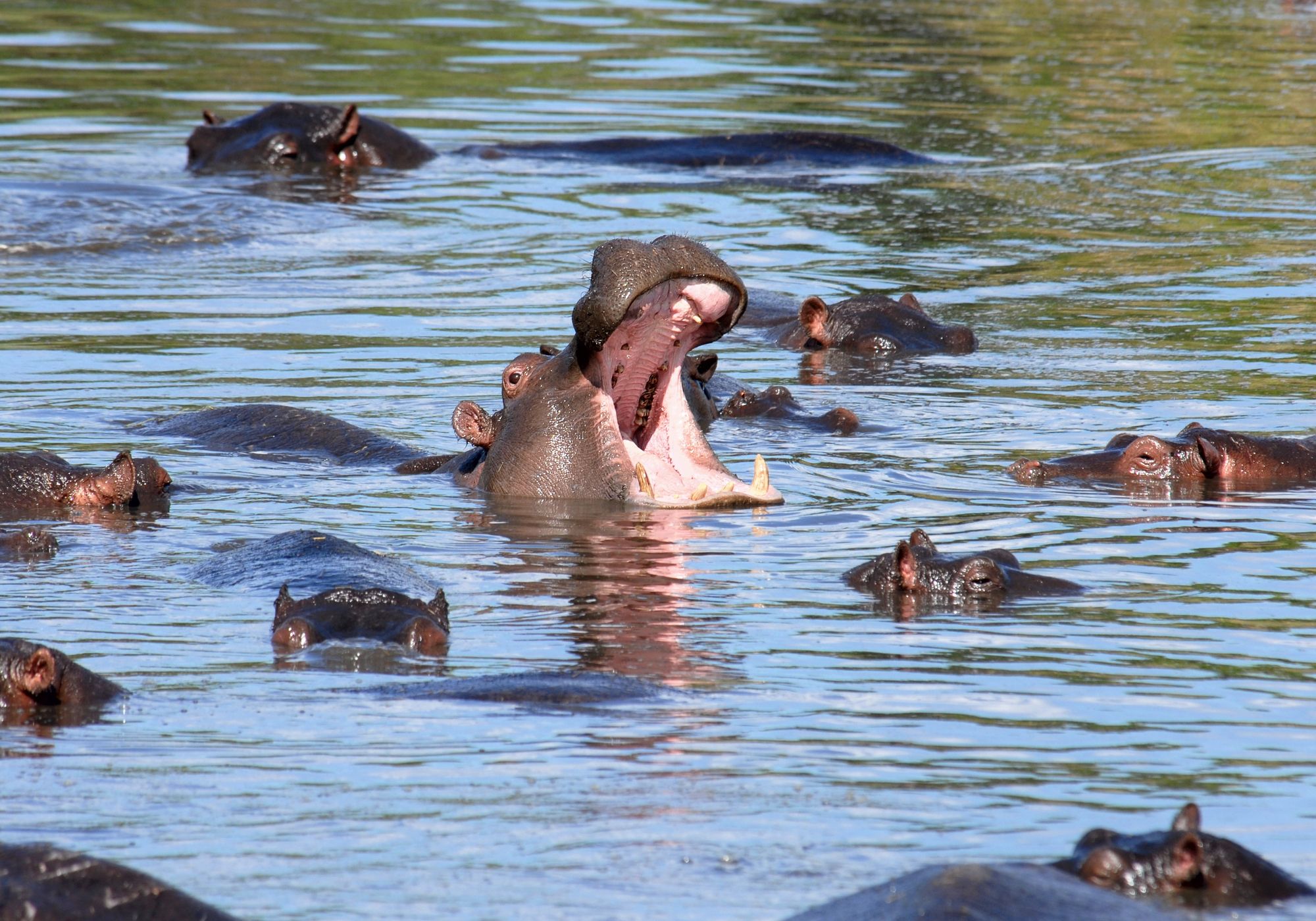
Covers real distance, reaches lagoons and hippo pods, and is how most water camps deliver you to an island for a walk.
Very good for birds and for the late afternoon, when the light on the water is the point. A private boat is worth asking about for exactly the same reasons a private vehicle is.
Game drive
Conventional, and on concession land a very good version of it: off-road driving to a sighting, and few enough vehicles that what you find generally stays yours.
In Moremi Game Reserve the same drive runs under statutory rules, on the track, in daylight, with no cap on vehicles at a sighting. Same landscape, different day, and the price will not tell you which you have booked.
Night drive
Concession land only. A spotlight after dark opens an entirely different animal list (genet, civet, porcupine, honey badger, bushbaby) and most of the hunting behaviour that predators actually do.
A week without one is a week of watching cats sleep, and it is the clearest single advantage a concession camp has over a camp inside the reserve.
Walking
On islands or dry ground, with an armed guide, usually a couple of hours after an early start.
It changes the scale of everything, and it is the one safari activity genuinely improved by there being nothing large to see: tracks, dung, termite architecture, what a particular tree is used for. A good walking guide holds a morning together with no big animals present at all.
Fishing
Seasonal, and catch-and-release at most camps. Tiger fish and bream, from a boat, generally as an alternative to an afternoon activity rather than a replacement for the safari.
It is a genuinely useful option for a mixed party, where one person would rather fish than take a third game drive of the day.
Scenic flight and helicopter
Almost always an extra, and the only way to understand the shape of where you are. From a few hundred feet the Delta resolves into a pattern that is impossible to grasp from inside it.
A fixed-wing scenic flight does most of that job. A doors-off helicopter flight is the photographers’ version, costs considerably more, and for the right traveller is the best money spent on the trip.
Which to prioritise
| If you want | Ask for |
|---|---|
| The thing you will remember | A mokoro morning, where the water allows it |
| Big cats | A land camp on concession land, with night drives |
| Birds | A water camp, and a motorboat in the late afternoon |
| To be out of the vehicle | Walking, and a camp on land that permits it from camp |
| Photographs of the landscape | A helicopter, doors off, at either end of the day |
| A quiet afternoon | Fishing, or simply to skip it. Both are fine |
Ready to turn this into a real itinerary?
Send us your dates, who is travelling and roughly what you want to spend per person per night. Our Botswana specialist comes back within 24 hours with a plan built around them and a costed quote.