The rhythm
Early, then a long pause, then late
It is the same shape everywhere in the Delta, and the pause in the middle is the part nobody tells you about.
Before light
Somebody wakes you, a voice outside the tent rather than a telephone, with a hot drink. It is dark and, in winter, genuinely cold.
Something quick by the fire, and out as the sky starts to go grey. This is the hour that everything else in the day is arranged around.
The morning
Three or four hours out, with a stop somewhere for coffee and something to eat. On the water that means a mokoro or a boat and a walk on an island; on land it means a drive, and in the dry months it can be exceptional.
Back to camp late morning. Brunch or lunch, and then the day stops.
The pause
Between about eleven and three or four, nothing happens, and this is deliberate. The heat is real, most animals are asleep, and the pause is what makes a dawn start sustainable for six consecutive days.
Some people read. Some sleep. Some sit on a deck and watch whatever is in front of camp, which in the Delta is frequently more than you would get from an hour of driving.
The afternoon
Tea at three or four, then out again until dusk. On concession land the drive often continues past dark with a spotlight, which is a different activity rather than an extension of the same one.
Sundowners somewhere, a drink on a floodplain or a channel bank while the light goes, is close to universal and is not a gimmick. It is the best half hour of the day.
The evening
Back after dark, a shower, and dinner. Some camps do one long table, some do separate ones, and most will do either if asked. Worth saying at check-in rather than hoping.
Then bed, early, because it starts again before light. Nobody stays up in the Delta.
Things that surprise people
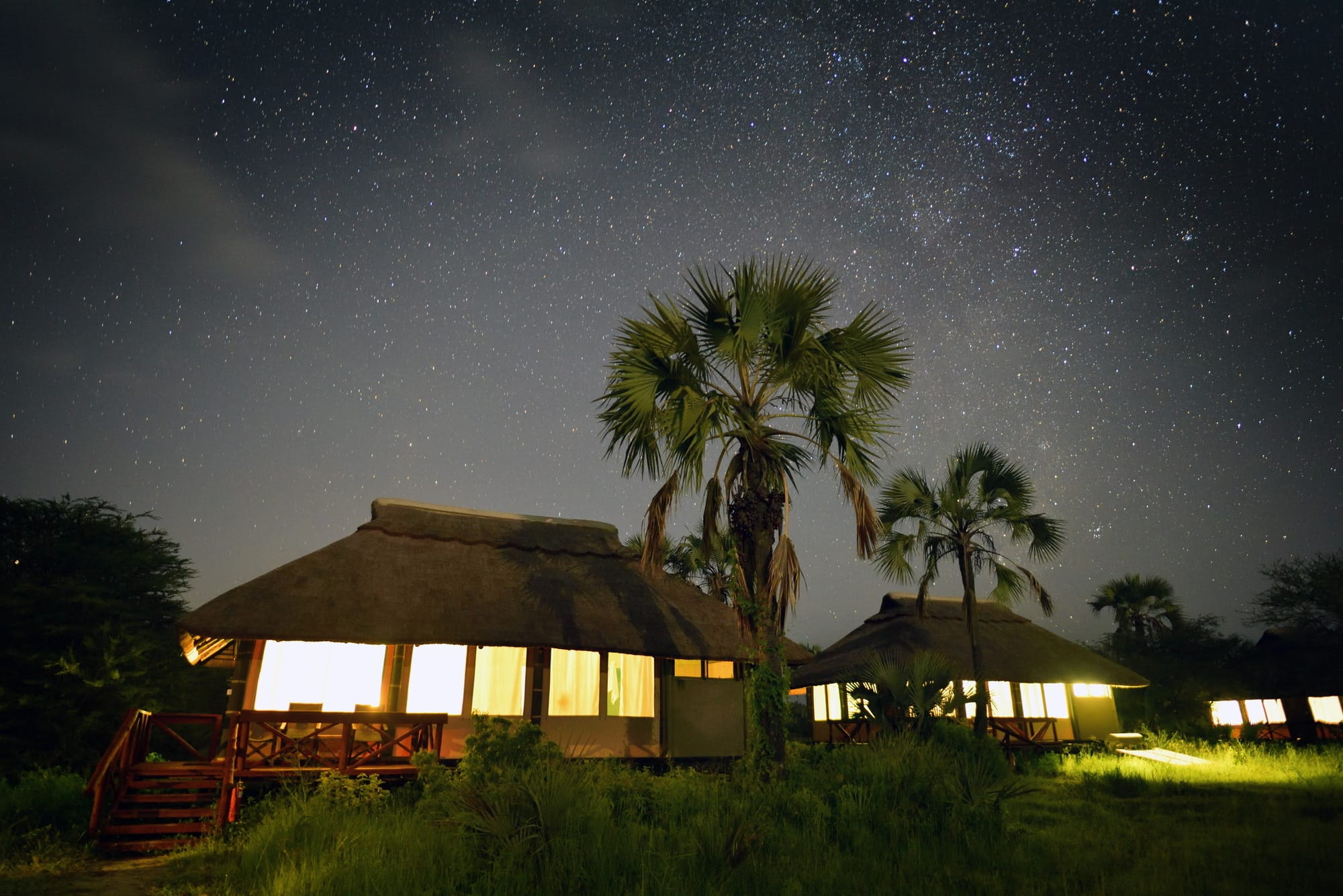
- You are escorted to your tent after dark, everywhere, because camps are unfenced and animals move through them. This is protocol rather than theatre.
- You will hear everything at night. Hippo grazing, lion a long way off, something scratching. By the third night it is the best part.
- Winter mornings are cold. Properly cold, in an open vehicle at speed. Blankets and hot water bottles exist for a reason.
- Laundry comes back the same day, which is why a small soft bag is enough for a fortnight.
- There is very little signal, and most camps have some wifi in a common area. Plan to be out of contact rather than assuming otherwise.
What you can change about it
A great deal, and it costs nothing. Breakfast in the vehicle rather than at camp buys the first two hours of light. Skipping an afternoon drive for a long evening one is a normal request. Staying an hour with one animal rather than collecting six is a request too, and a good guide is relieved to hear it.
At a camp of eight or nine tents all of that is a conversation at dinner the night before rather than a policy.
Ready to turn this into a real itinerary?
Send us your dates, who is travelling and roughly what you want to spend per person per night. Our Botswana specialist comes back within 24 hours with a plan built around them and a costed quote.